The Parthenon, a temple dedicated to Athena, stands as the symbol of classical Greek architecture, with its perfect proportions and iconic Doric columns. These columns are simple, sturdy, and unadorned, with fluted shafts and plain capitals, adding elegance and timelessness.
The Timeless Architecture of the Acropolis
The Acropolis of Athens is one of the most iconic archaeological sites in the world, embodying the cultural and architectural achievements of ancient Greece. Perched high above the city, it showcases remarkable structures like the Parthenon, the Erechtheion, and the Temple of Athena Nike, each a testament to classical Greek artistry, engineering, and devotion to the gods.
Architectural highlights of the Acropolis of Athens
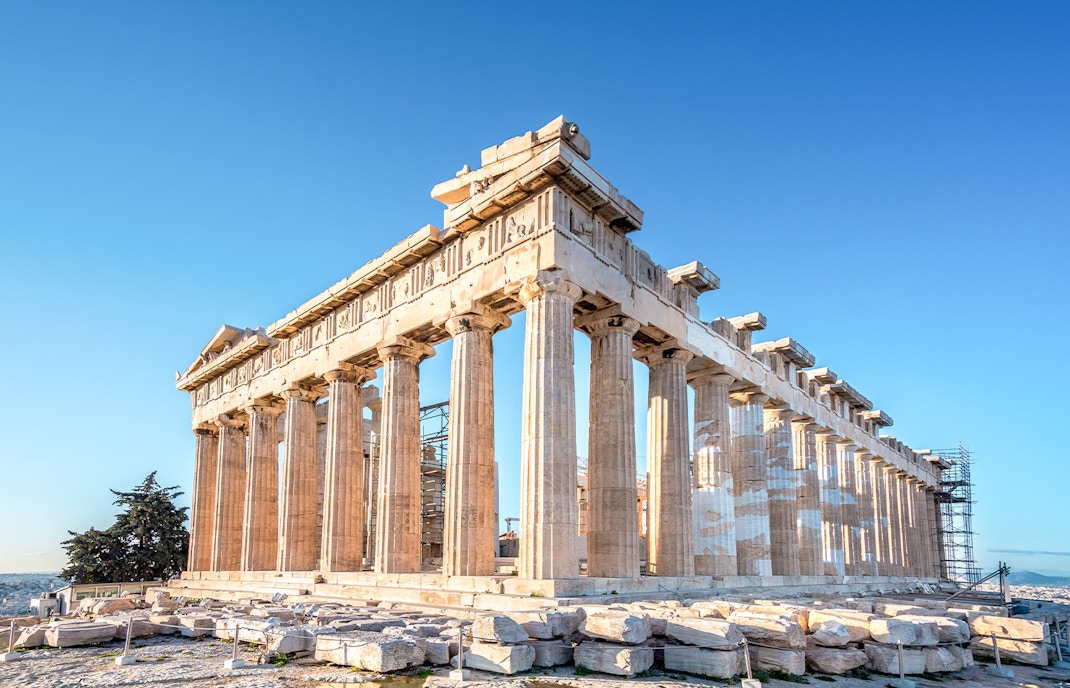
The Parthenon: Pillar of Ancient Greece
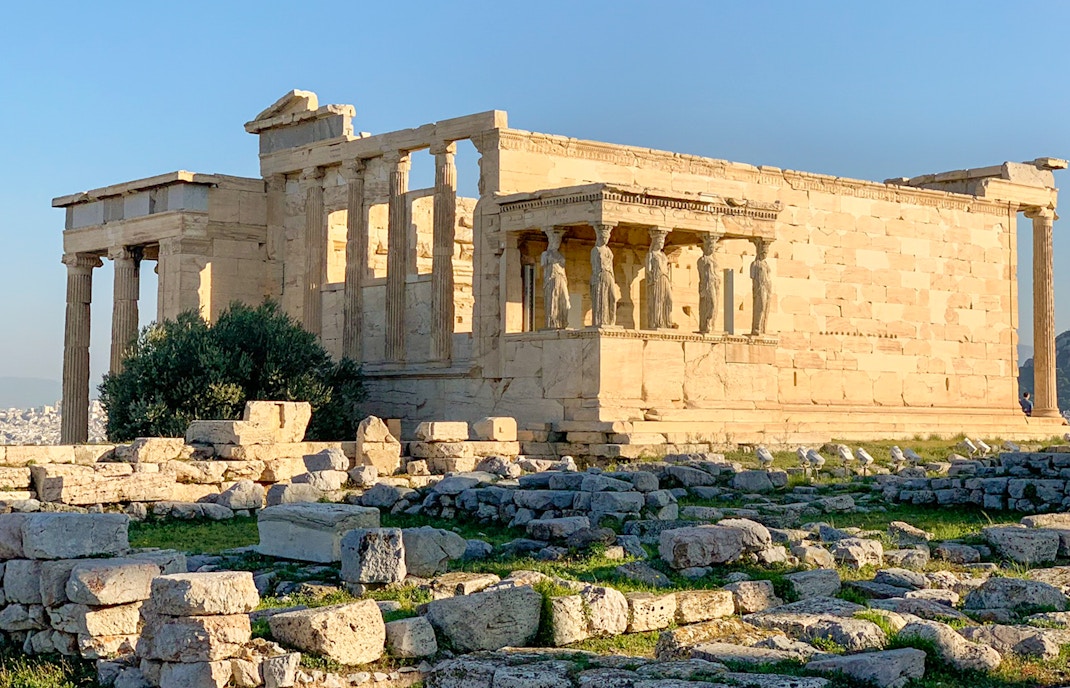
The Erechtheion: Sacred duality
The Erechtheion, an asymmetrical temple, is famed for its unique design. Unlike traditional temples, its structure was divided into multiple levels and sections to accommodate the slopes of the hill. It houses shrines to Athena and Poseidon and features the graceful Caryatids (stone maidens) as columns.
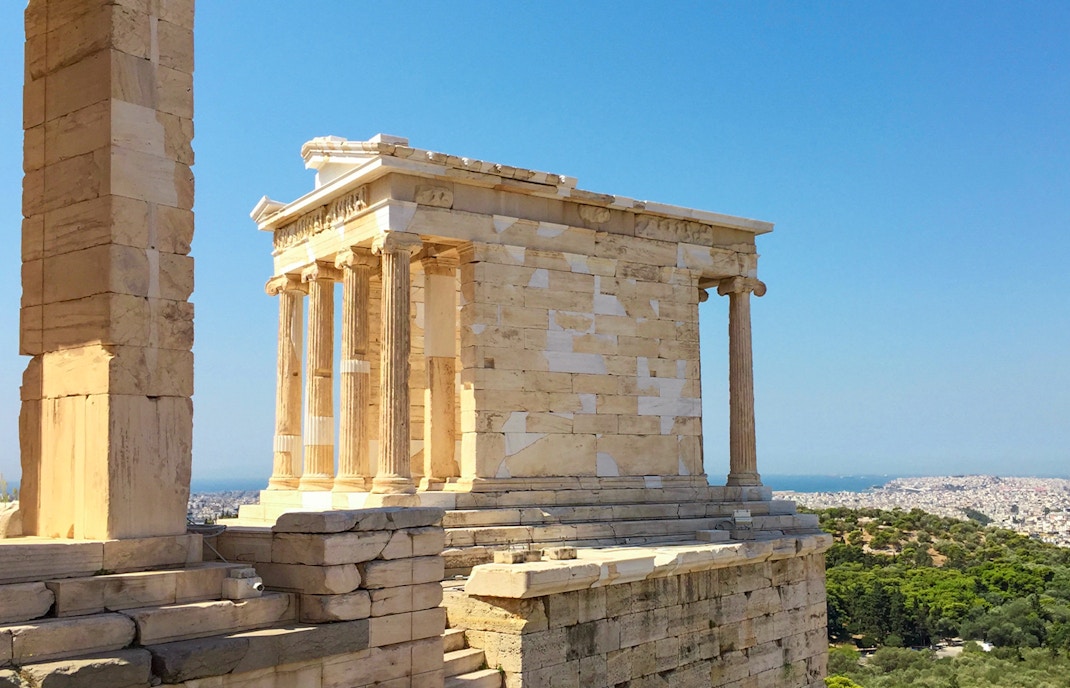
The Temple of Athena Nike: Elegance in simplicity
A small but exquisite temple, the Temple of Athena Nike is celebrated for its Ionic design. With its slender, symmetrical columns and elegant proportions, the temple exudes a sense of lightness and refinement. Its friezes, carved with scenes of historical battles and victories, wrap around the temple, depicting Athenians in triumph.
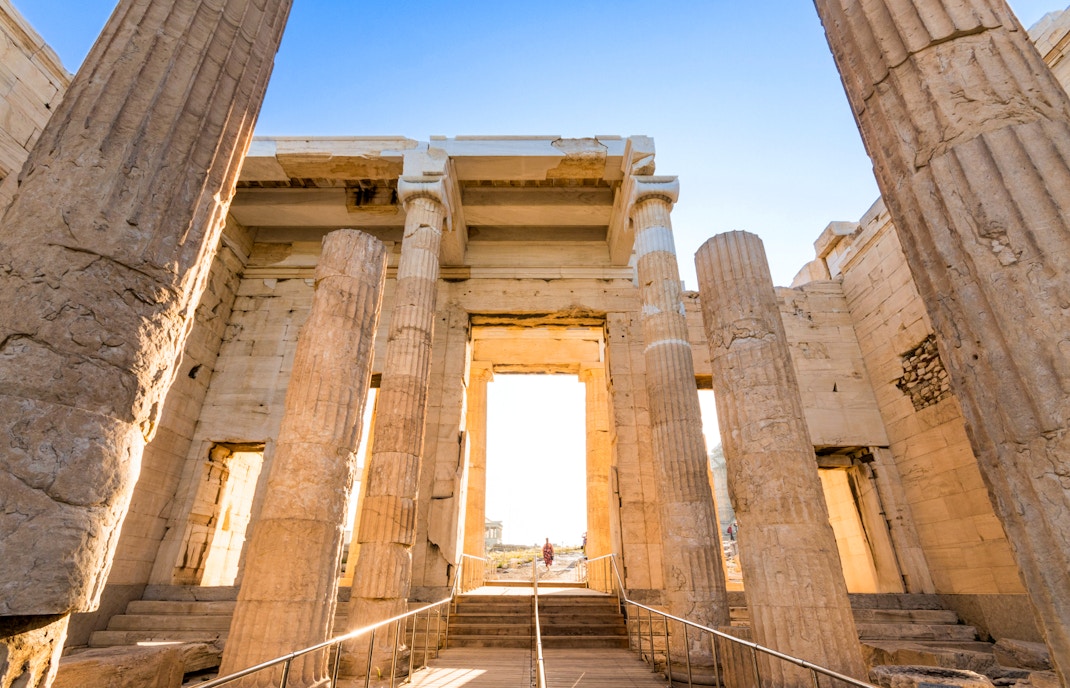
The Propylaea: Grand entrance
With its combination of sturdy Doric columns and more refined Ionic columns, the structure blends strength and elegance. The grand entrance is flanked by wide, majestic staircases leading up to the Acropolis, offering sweeping panoramic views of Athens and the surrounding landscape.
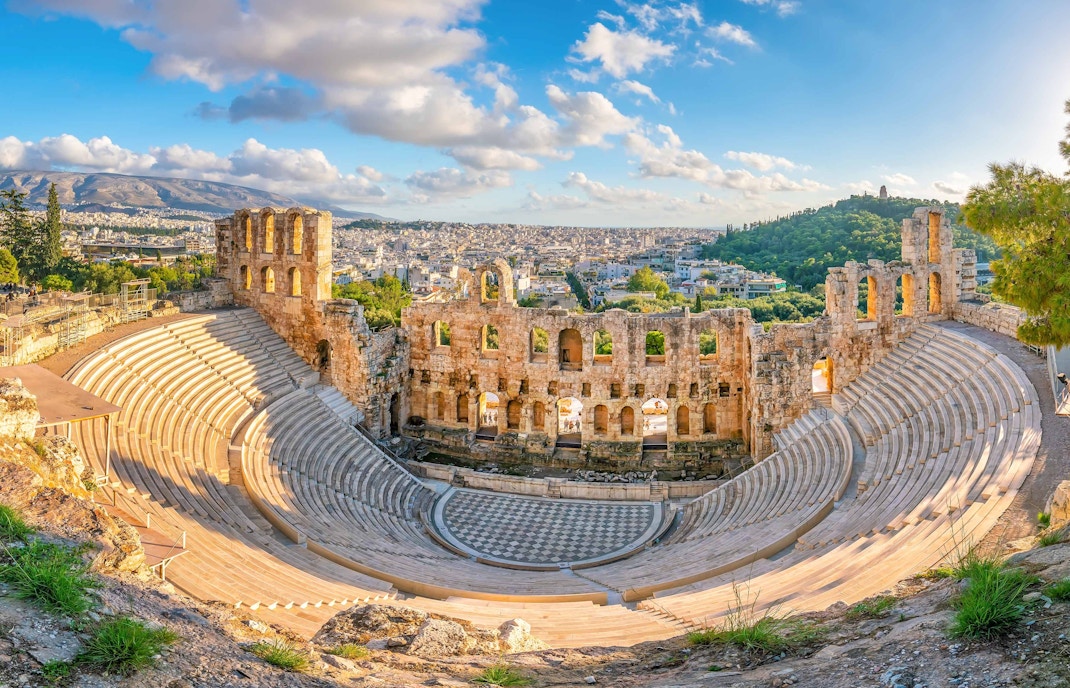
The Odeon of Herodes Atticus: Acoustic masterpiece
Built by the Romans in the 2nd century CE, this grand structure features a semicircular design, with stone seating that rises in tiers around a central stage. The theatre's sound quality is so precise that every word spoken on stage can be heard clearly from any seat.
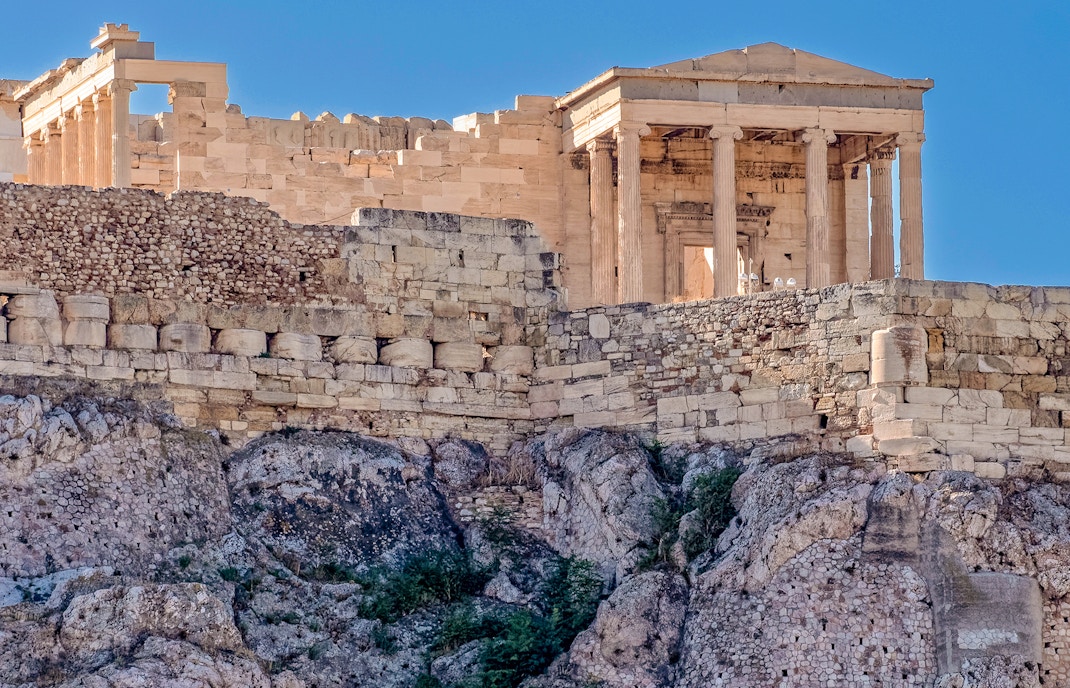
The Acropolis Wall: Fortress of the Gods
The Acropolis Wall, a massive defensive structure, once enclosed the sacred hill, guarding it from invaders. Made of large, rugged stones, the wall's impressive height and thickness are still visible today. The walls' strategic placement along the perimeter of the Acropolis offered protection while enhancing the site's symbolic significance.
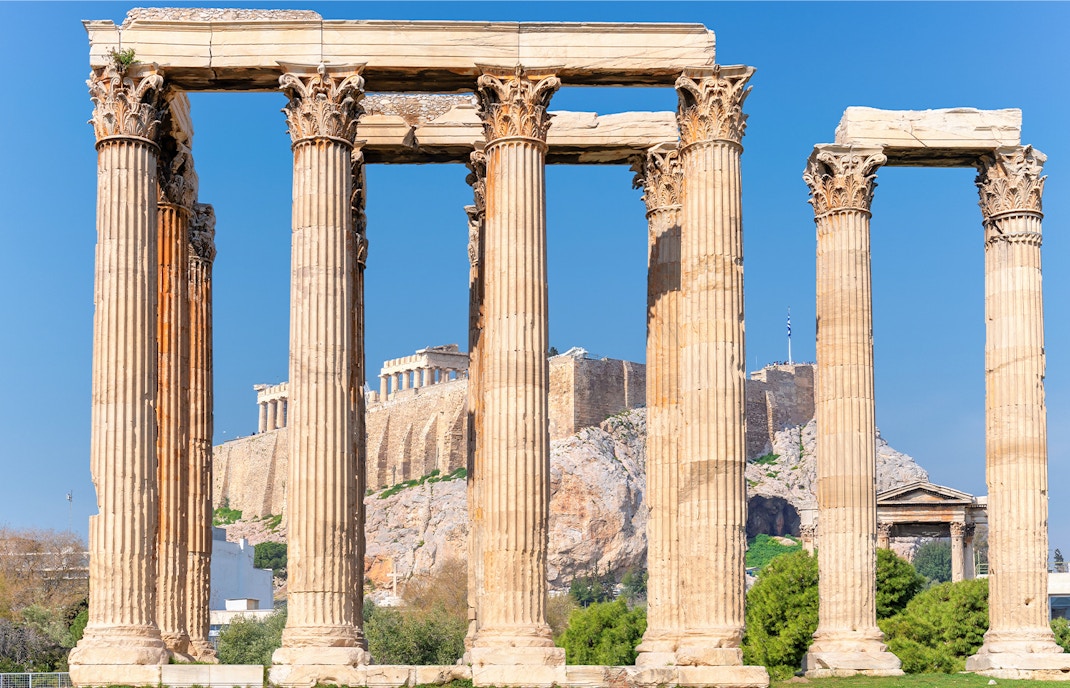
The Temple of Zeus: Monumental scale
The Temple of Olympian Zeus, though now in ruins, once stood as one of the grandest temples in ancient Greece. Originally boasting 104 towering Corinthian columns that have elaborate and decorative capitals, many of which still remain, the temple’s sheer size and scale were awe-inspiring.
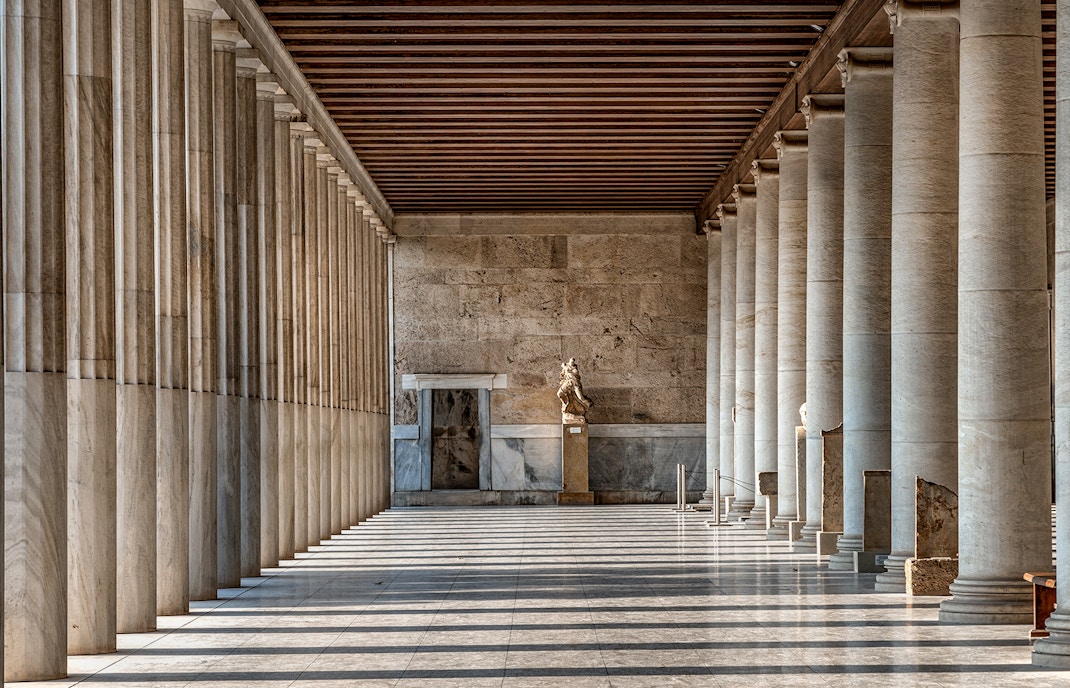
The Stoa of Attalos: Commercial revival
The Stoa of Attalos is a large, columned portico that once lined the ancient Agora of Athens, serving as both a marketplace and a gathering place. Its elegant Ionic columns support a covered walkway that was historically filled with shops, creating a bustling commercial space.
Who built the Acropolis of Athens?
The Acropolis of Athens was not built by a single person, but rather was constructed and developed over many centuries by different rulers, architects, and artists. However, key figures played critical roles in the construction and development of the major buildings:
- Pericles (5th century BCE)
Pericles, the influential Athenian statesman, is often credited with overseeing the grand construction projects on the Acropolis during the Golden Age of Athens, particularly the building of the Parthenon. Under his leadership, the Acropolis was transformed into a symbol of Athenian power, culture, and devotion to the gods. - Iktinos and Kallikrates (5th century BCE)
These two architects are credited with the design and construction of the Parthenon. Iktinos was the primary architect, while Kallikrates assisted him. Their design is considered one of the most refined expressions of Doric architecture, though they incorporated some Ionic elements to achieve a sense of visual harmony. - Phidias (5th century BCE)
Phidias was the master sculptor responsible for overseeing the artistic aspects of the Acropolis, including the sculpture of the Parthenon. He also crafted the massive gold-and-ivory statue of Athena housed inside the Parthenon. Phidias’ influence extended to the sculptural decorations on the Parthenon’s frieze, metopes, and pediments. - Mnesikles (5th century BCE)
Mnesikles was the architect of the Propylaea, the monumental gateway that serves as the entrance to the Acropolis. His design blends both Doric and Ionic architectural elements and is known for its grandeur. - Herodes Atticus (2nd century CE)
Although not involved in the original construction of the Acropolis, Herodes Atticus, a wealthy Roman philanthropist, is responsible for the construction of the Odeon of Herodes Atticus in the 2nd century CE. This Roman structure was built to enhance the acoustics of the Acropolis for performances and is still in use today.
Acropolis of Athens architectural style
Each structure within the Acropolis of Athens contributes to the architectural richness of the site, reflecting different periods, styles, and functions throughout ancient Greek history.
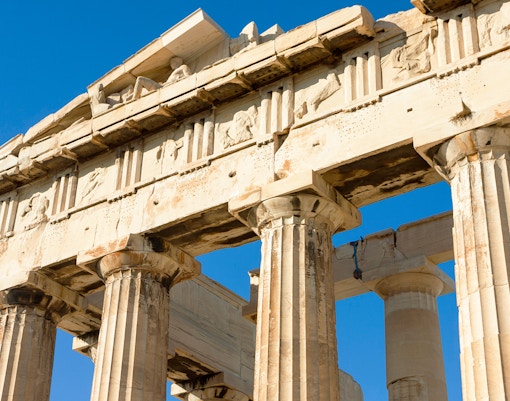
The Parthenon
Architectural style: Doric with Ionic Elements
The Parthenon is primarily built in the Doric order, characterized by simple, sturdy columns with no base and fluted shafts. However, it also incorporates Ionic elements, like the frieze and the slight curvature of the columns, which enhances its visual appeal and creates the illusion of perfection. The Parthenon’s proportions are considered ideal, adhering to the classical Greek notion of balance and harmony.
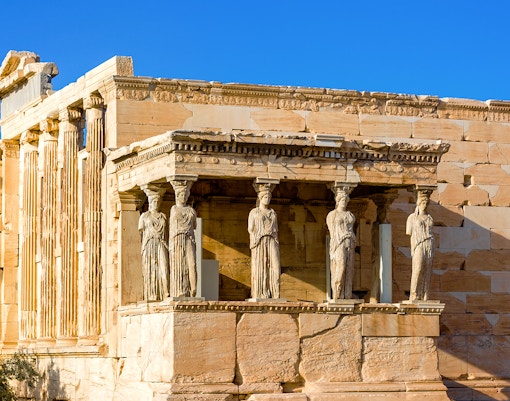
The Erechtheion
Architectural style: Ionic
The Erechtheion stands out for its asymmetrical design, reflecting the uneven terrain of the Acropolis. It is built in the Ionic order, distinguished by columns with slender proportions and elegant scroll-like capitals. The most iconic feature of the Erechtheion is the Porch of the Caryatids, where six elegantly draped female statues replace traditional columns, adding a unique sculptural element to the temple's architecture.
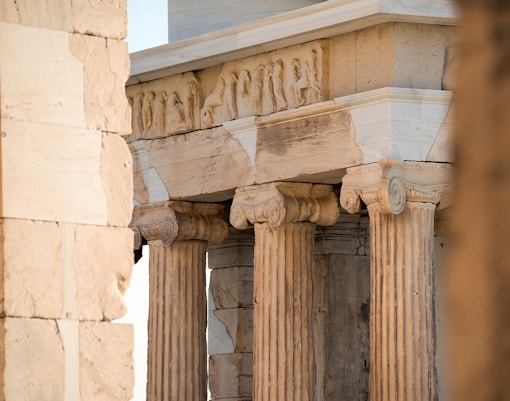
The Temple of Athena Nike
Architectural style: Ionic
The Temple of Athena Nike is a small yet exquisitely refined structure built in the Ionic style. The temple features slender, fluted columns with delicate proportions and graceful capitals. Its simplicity and elegance are key characteristics of the Ionic order. The frieze on the temple’s exterior depicts historical military victories, showcasing the temple's purpose as a symbol of triumph.
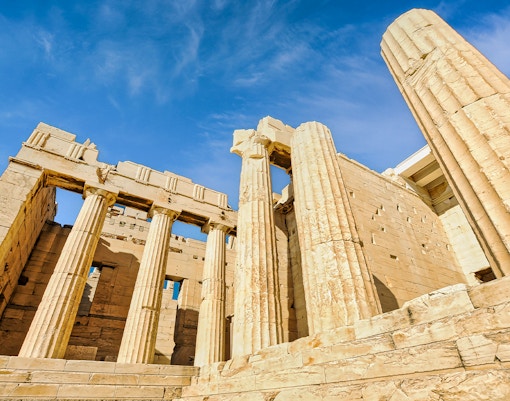
The Propylaea
Architectural style: Doric and Ionic
The Propylaea serves as the grand entrance to the Acropolis and is a combination of both Doric and Ionic styles. The main structure uses Doric columns, while the inner porticos are Ionic, providing a dynamic contrast. This architectural fusion highlights the grandeur of the entrance, while also reflecting the cultural blend of the Classical and transitional periods.
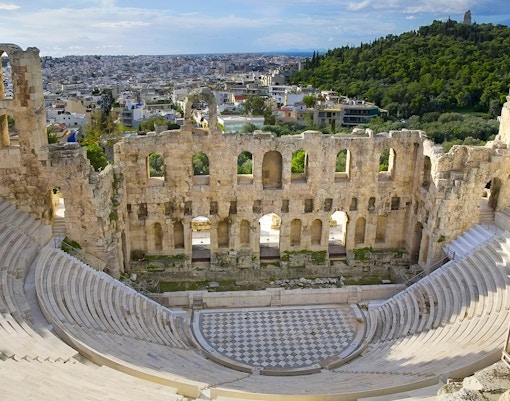
The Odeon of Herodes Atticus
Architectural style: Roman (but with Greek influences)
The Odeon, although a Roman addition, incorporates classical Greek elements in its design. The theatre is semi-circular and has a stone seating structure, with an emphasis on acoustics, a common feature in Greek theatres. The use of columns and decorative elements reflects Roman engineering with an eye toward Greek aesthetics, demonstrating the blending of the two cultures.
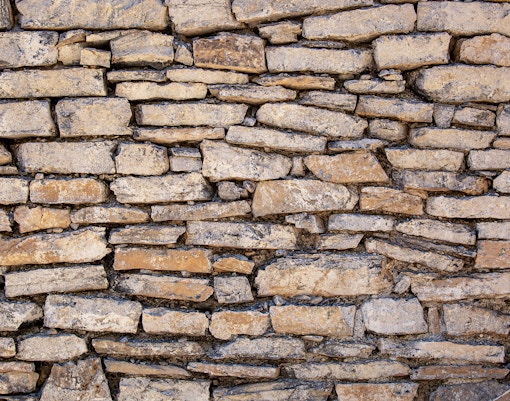
The Acropolis Wall
Architectural style: Ancient Greek Military Architecture
The defensive walls that encircle the Acropolis are built with a mix of both Cyclopean and regular masonry. The walls are not part of a specific architectural ‘order’ like the temples, but their design is functional and robust, with large, irregular stones laid in a technique that reflects the necessity for defence, rather than decorative style.
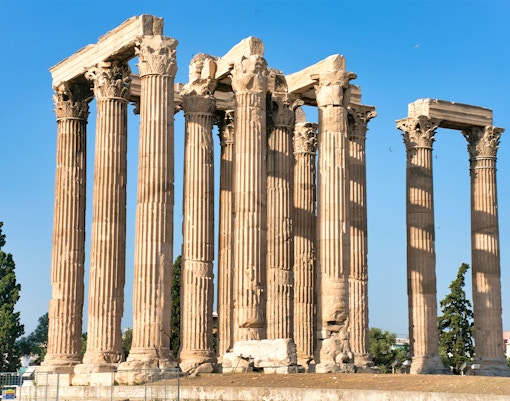
The Temple of Olympian Zeus
Architectural style: Corinthian
The Temple of Olympian Zeus, though largely in ruins, was originally built in the Corinthian style, which is characterized by columns with ornate capitals decorated with acanthus leaves. The temple's grand scale and column height emphasized the grandeur of the deity it was dedicated to, making it one of the largest temples in Greece.
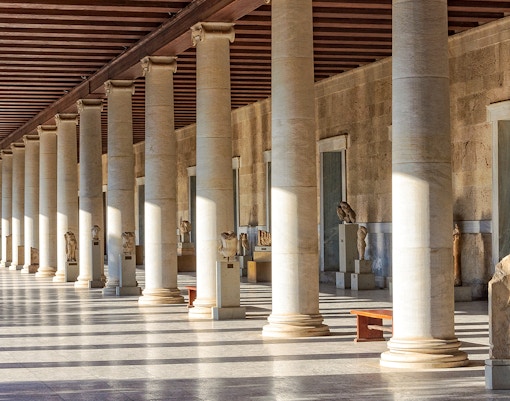
The Stoa of Attalos
Architectural style: Ionic
The Stoa of Attalos, originally built in the 2nd century BCE and reconstructed in modern times, is a long, covered portico that features Ionic columns. The Stoa was an important commercial and social space, and its design with a row of columns supporting a roof aligns with the classical principles of symmetry and proportion that are central to Ionic architecture.
Frequently asked questions about the Acropolis’ architecture
The Parthenon is primarily built in the Doric architectural style, though it also incorporates Ionic elements, such as the frieze and subtle curvature of the columns.
The Parthenon was designed by the architects Iktinos and Kallikrates, while the sculptor Phidias oversaw the decoration and the creation of the statue of Athena inside.
The Parthenon is considered a masterpiece of Greek architecture, celebrated for its perfect proportions, optical refinements (like slight curvature to the columns), and its symbolic importance as a representation of Athenian democracy, culture, and devotion to Athena.
The Erechtheion was constructed between 421 BCE and 406 BCE, making it over 2,400 years old.
The Erechtheion is notable for its Ionic columns, asymmetrical design, and the famous Caryatid Porch.
The Temple of Athena Nike is renowned for its graceful and compact design, as well as its delicate proportions and sculptural friezes, which depict historical military victories.
The architect of the Propylaea was Mnesikles.
The Propylaea features Doric columns in the outer portico and Ionic columns in the inner porticos, creating a harmonious balance between both styles.
