
Acropolis Tickets
Acropolis

Parthenon tickets

Included with Acropolis tickets

Timings

RECOMMENDED DURATION

3 hours

Parthenon on the Acropolis

Reviews

Loved by 51 million+
Trustpilot rating: 4.5 out of 5

Richard P

United Kingdom
Couple
3 weeks ago
Anna was superb.Bubbly personality,full of information and patient.The hearing devices were excellent - we never missed a comment.

Abelardo C

United States
Solo
3 weeks ago
The guide was very knowledgeable and professional. The meeting point was with walking distance to the Acropolis. I booked the rour the night before and it was easy and had prompt and effective communication through the App. Thabk you it was an enjoyable experience

Arlene B

Malta
Couple
3 weeks ago

+5 more

Our full-day tour to Meteora was truly one of the highlights of our trip to Greece. From start to finish, everything was exceptionally well organized and thoughtfully planned, making the entire experience smooth and enjoyable. The journey itself was comfortable, and the scenery along the way was beautiful. But nothing compares to arriving at Meteora — the views are absolutely breathtaking. Seeing the monasteries perched on top of those massive rock formations is something you really have to experience in person. A special thank you to our guide, who made the day even more memorable. They were knowledgeable, friendly, and genuinely passionate about sharing the history and stories behind Meteora. The audio explanations added so much depth to what we were seeing. The lunch was also a pleasant surprise — delicious, satisfying, and well-timed, giving us a nice break to relax and enjoy local flavors. Overall, everything about this tour was excellent: the organization, the guide, the food, and of course the incredible destination itself. I would highly recommend this experience to anyone visiting Greece. It’s absolutely worth it!

Alexandru L

Couple
3 weeks ago
Wery well organisme tour. The drivers and guide was very nice, profesional atitudine We was inside of only 2 monastery,but we stop în sever al place for photos.

Laura G

Solo
3 weeks ago
Very nice guide, many interesting stories. There's a good restaurant with restrooms at the temple. Entry is 20€ which I thought was a bit overpriced. Especially since they close right after the sun has set and you're kinda hurried out and back to your bus. But I saw a lot nice places around Athens and the beautiful ocean :)

Vanessa C

Greece
Group
3 weeks ago

+2 more

We enjoyed the tour overall; the guides were quite friendly, especially Nicolás, who was very knowledgeable and kind. We weren’t able to see the sunset due to the weather, but the two-day tour was excellent and informative, with beautiful places full of history. The hotel was pretty good; we’d read some negative reviews, but overall it was fine. The only negative point I have is the return transportation. We were a group of four and were assigned separate seats, which was super uncomfortable for a four-hour trip. There were people sitting alone—I didn’t understand that. Overall, everything was fine; I recommend this tour.

Tana H

Canada
Couple
3 weeks ago

+3 more

Quick moving line to get in, good indications, beautiful place. It wasn't too crowded so we were able to explore easily and get some wonderful pictures for souvenirs.

Vanessa R

Philippines
Solo
Apr 2026
It's my first time visiting Greece and the experience is unforgettable. Everything so smooth just present your QR code your good to go.

Top things to do in Athens

The Parthenon is included with all Acropolis tickets. No separate ticket is needed. You’ll reach it near the start of the summit plateau, just beyond the Propylaea, after a 10–15-minute uphill climb from the Acropolis entrances, and most visitors naturally pass it as part of the main route. Book a guided tour or a timed-entry ticket with an audio guide if you want the building’s design choices explained while you’re standing in front of them.

How to best experience Parthenon

Best time to visit

Choose the first entry slot or the last 2 hours before closing. The stone reads more clearly in softer light, and the summit is easier to navigate before the late-morning tour groups compress the viewpoints. Avoid 10:30am–2pm if you want space to walk the perimeter.

How long to spend

Plan 15–20 minutes self-guided, or 20–30 minutes with a guide. You can’t enter the interior, so the visit is about reading the exterior from multiple angles. If you stop for only one photo, you’ll miss the building’s subtle corrections.

Where it fits in your itinerary

The Parthenon comes early once you’ve climbed onto the Acropolis plateau. If it’s your priority, don’t spend too long on the lower slopes first. Reach the summit with water, steady footing, and enough focus left to circle the structure properly.

Crowd patterns

Crowds peak from roughly 10:30am–1:30pm, especially on cruise-heavy days and in summer. At that point, the west and south sides become photo bottlenecks, and moving around the temple slows down. Earlier and later visits make the building easier to read as architecture.

What to prioritize if time is short

If you only have 10 minutes, walk past the west front, then continue to the south and southeast corners. That gives you the clearest sense of the temple’s scale, column rhythm, and hilltop position. Don’t stay fixed at the first viewpoint.

Common mistakes to avoid

Most visitors treat the Parthenon as a single postcard stop. Walk around it instead, because the proportions shift by side, and the marble underfoot can be slippery. Wear shoes with grip and look at the platform and columns, not only the skyline.

Best tickets to experience Parthenon

Ticket typeWhy choose it

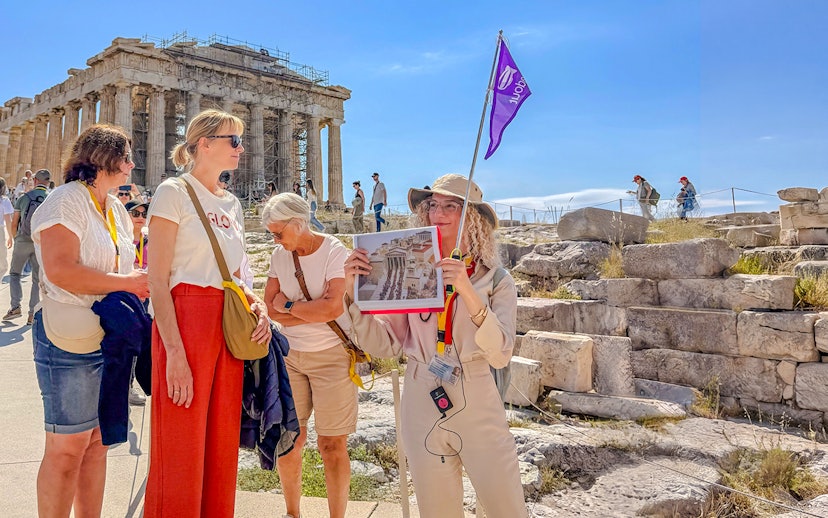
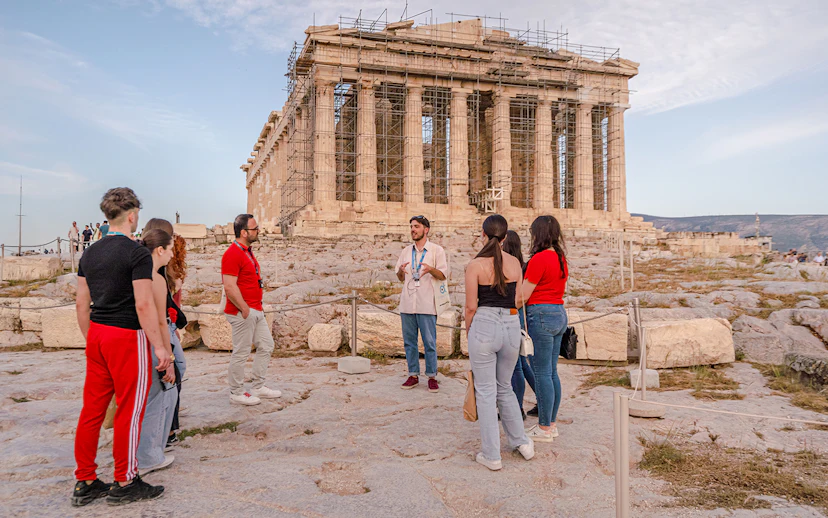
Guided tour

Best if you want the Parthenon’s proportions, myths, and restoration work explained while you’re on the summit.

Timed-entry ticket with audio guide

Gives you flexibility, context, and a smoother entry without standing in the ticket-buying line first.

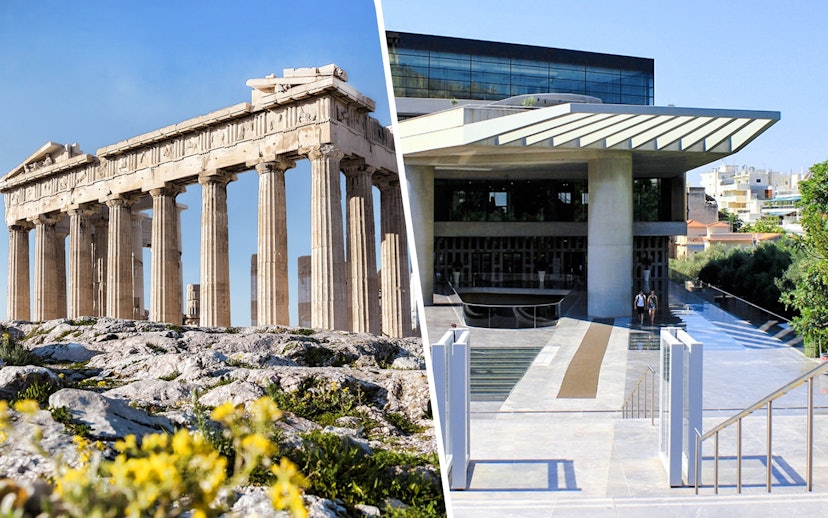
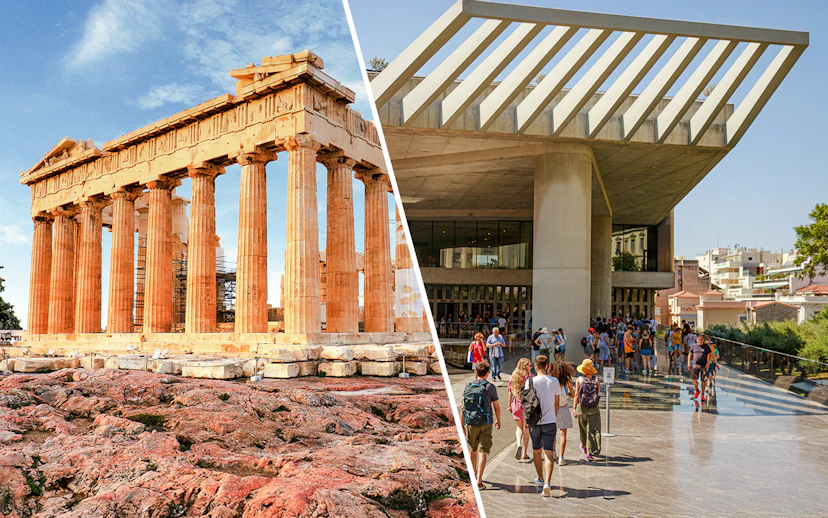
Acropolis + Acropolis Museum combo

See the Parthenon in place, then study its sculpture program and surviving originals in the museum.

Why it's worth seeing

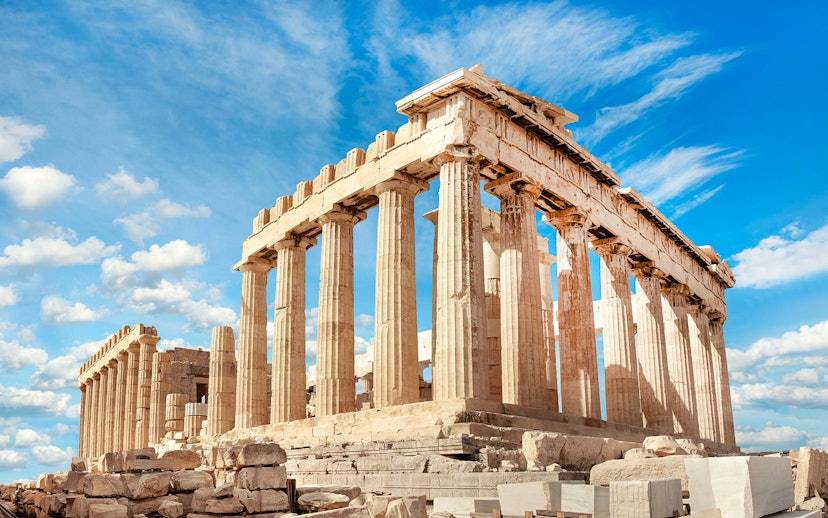
The Parthenon matters because it is the building that fixed the visual language of Classical architecture for centuries after Athens. Most visitors don’t realize that many of its ‘straight’ lines aren’t straight at all: the platform rises slightly, the columns swell subtly, and the corners thicken to correct how the human eye reads distance. If you know where to look, the temple stops being a ruin and starts reading like precision engineering.

The columns: look for the slight swell

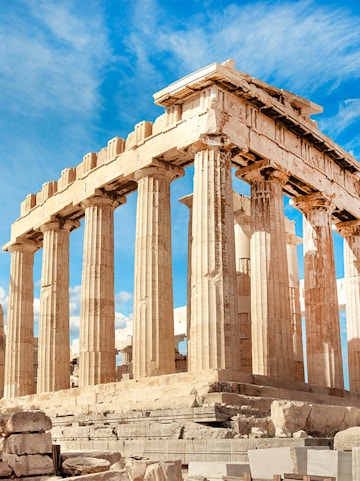
Stand along the long south side and look closely at the shafts rather than the skyline. The columns widen slightly at mid-height, a refinement called entasis, so they don’t appear thin from a distance. The corner columns are also thicker than the others, which helps the whole exterior hold its visual balance.

The platform: notice the upward curve

From the east or west end, look low across the temple’s base rather than directly at eye level. The stylobate, the platform the columns stand on, rises subtly toward the center instead of running flat. That small curve prevents the building from seeming to sag when viewed against bright Attic light.

The sculpture program: read the missing pieces

Walk the perimeter with the museum in mind. The pediments, metopes, and frieze once wrapped the temple in carved stories of Athena, processions, and conflict. Many originals are now in the Acropolis Museum, but seeing the gaps on-site helps you understand how much of the Parthenon was image as well as structure.

Built between 447 and 432 BC under Pericles, the Parthenon began as Athens’ temple to Athena and later became a church, a mosque, and, under Ottoman rule, a powder store. The explosion of 1687 caused much of the damage visitors see today. It now functions as Greece’s most recognizable ancient monument and one of the world’s longest-running conservation projects.

👉 Explore the full history of the Acropolis

Notable figures

Pericles | Statesman

Drove the Acropolis rebuilding program and used the Parthenon as Athens’ political statement.

View Wikipedia

Ictinus | Architect

Co-designed the Parthenon’s plan, proportions, and much of its architectural logic.

View Wikipedia

Callicrates | Architect

Worked with Ictinus on the Parthenon and helped shape its refined exterior order.

View Wikipedia

Phidias | Artistic director

Oversaw the sculptural program and created the lost colossal Athena Parthenos statue.

View Wikipedia

Know before you go

  • Open: The Parthenon follows Acropolis hill hours, usually 8am–8pm in summer and 8am–5pm in winter.
  • Last entry: Usually 30–60 minutes before closing, depending on the season and site operations.
  • Timed entry: Book a date and hour slot in advance; entry is typically allowed 15 minutes before or after.
  • Heat closures: Midday closures can happen during extreme heatwaves in Athens.
  • Official source: Check the Hellenic Heritage e-ticket website before visiting.
  • Address: Dionysiou Areopagitou, Athens 105 58, Greece (Google Maps: ‘Acropolis of Athens’).
  • Nearest metro: Acropoli station is about a 5-minute walk to the south entrance; Monastiraki is about 10–15 minutes to the main entrance.
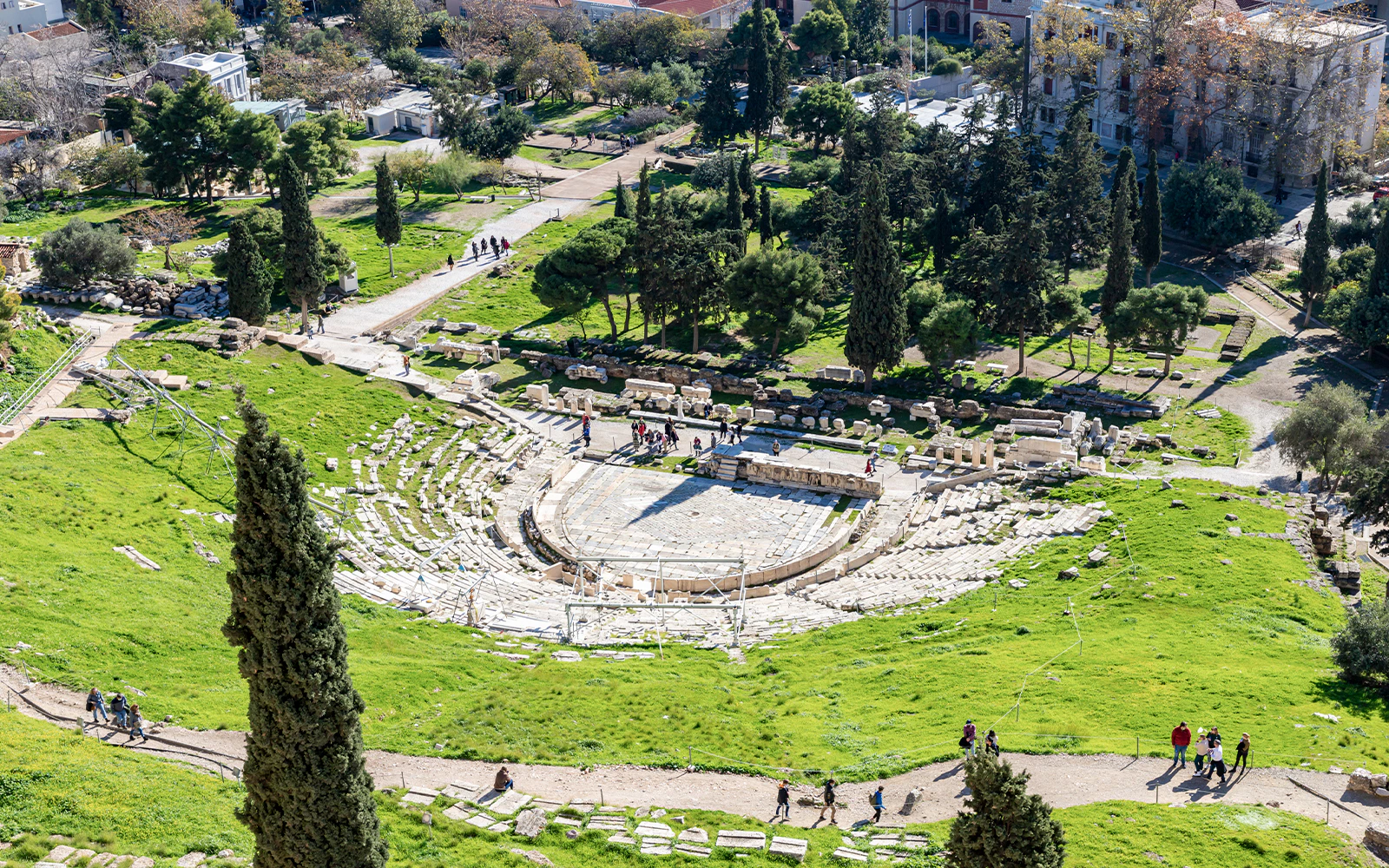
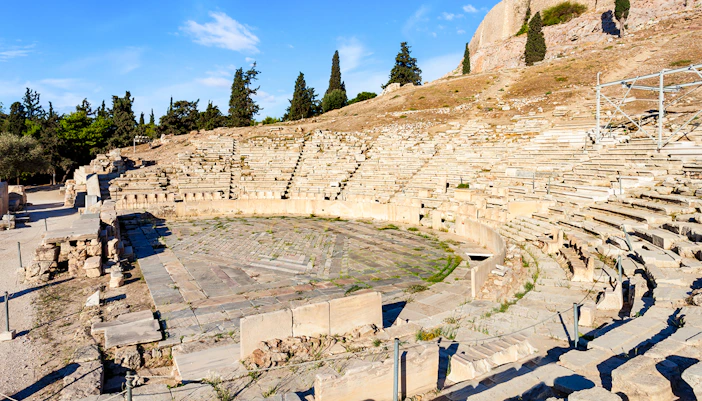
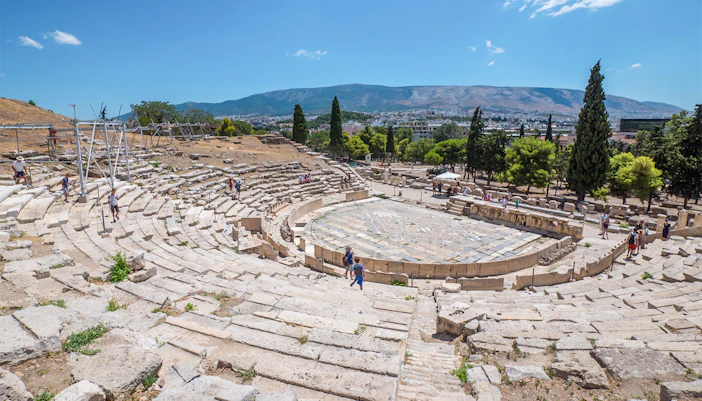
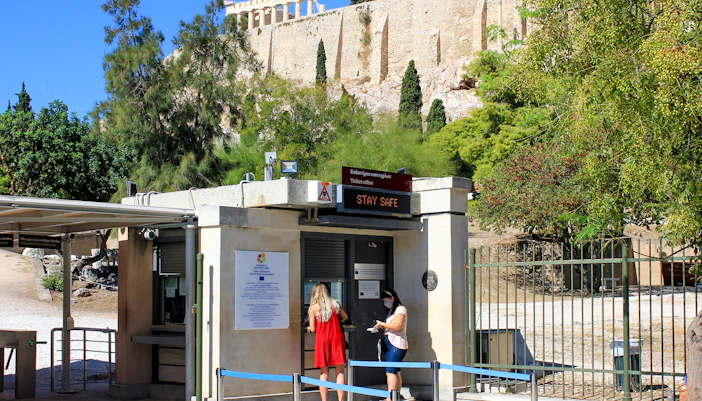
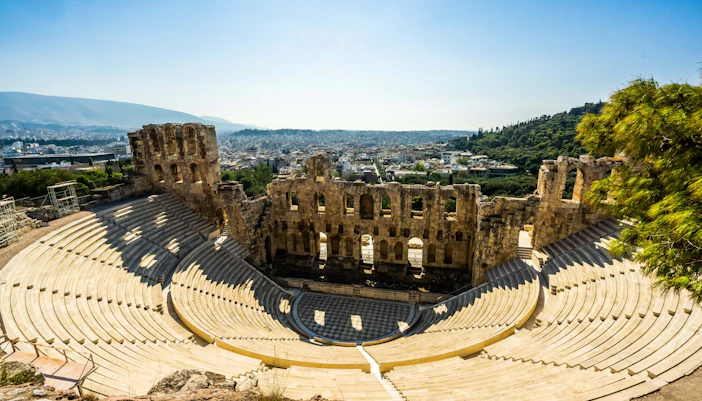
  • Entry point: Use the main west entrance or the south entrance near the Theater of Dionysus.
  • Walk time: Allow about 10–15 minutes uphill from the main entrance, or 15–20 minutes from the south entrance, to reach the Parthenon.
  • Route: Direct access is not possible; you must enter the Acropolis site and follow the summit pathways through the Propylaea.
  • Wheelchair access: Access is limited; the summit includes uneven stone, slopes, and slippery marble sections.
  • Elevator: An accessible elevator route exists for visitors with mobility needs, but availability is venue-managed and should be confirmed a day ahead at +30 210 3214172 or +30 210 9238470.
  • Terrain: Some restored paths are smoother than others, but the Parthenon area is not fully step-free.
  • Facilities: Accessible restrooms are available near the main site entrances and the Acropolis Museum area.
  • Hearing support: Some guided Headout tours use whisper headsets, which make on-site commentary easier to follow in crowds.
  • Photography: Standard outdoor photography is allowed, but flash, tripods, drones, and professional filming may be restricted or require permission.
  • Bags: Large backpacks, suitcases, and bulky luggage are not allowed inside the archaeological site.
  • Pets: Pets are not allowed, except for registered service animals.
  • Security: Security screening is mandatory even if you already have a pre-booked timed ticket.
  • Conduct: Touching, climbing on, or crossing protected stonework is prohibited.
  • Climb: Reaching the Parthenon usually involves a 10–20-minute uphill walk, depending on your entrance.
  • Surface: Expect worn marble, uneven stone, and steep steps that can be slippery even in dry weather.
  • Standing: Most visitors stand and walk for 60–90 minutes across the summit and viewing areas.
  • Difficulty: Moderate; the combination of incline, heat, and little shade makes summer visits feel harder.
  • Alternative: Visitors with qualifying mobility needs should arrange the elevator route in advance rather than attempt the standard climb.

FAQs

Yes. Entry to the Parthenon area is included with every valid Acropolis ticket. No separate ticket exists.

More reads

Acropolis tickets, entrances, hours, and planning essentials

Acropolis Museum guide: what to see after the hill

Erechtheion and Caryatids: where to look, and why