‌‌‌‌
‌

How to visit Acropolis of Athens

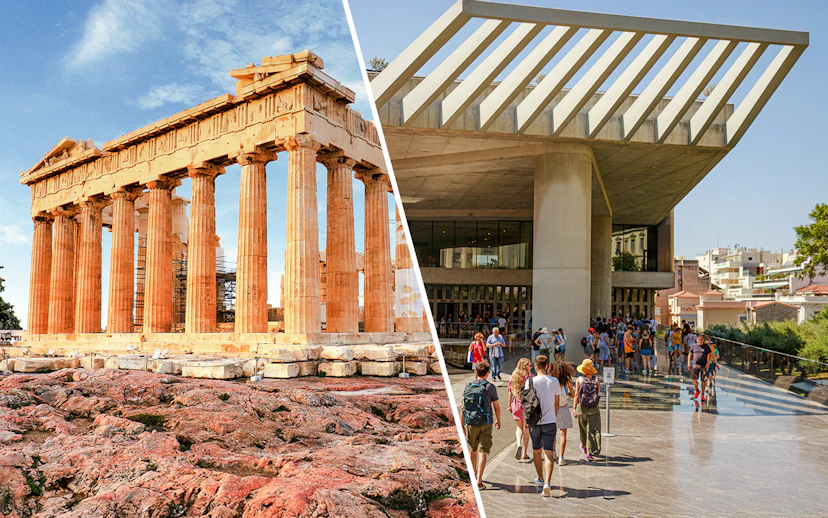
The Acropolis of Athens is a 3-hectare open-air complex with five ancient monuments across its summit and South Slope, including the Parthenon. The climb is steep and the plateau fully exposed, with uneven limestone underfoot that gets extremely hot in summer. Almost 20,000 visitors are admitted daily , and the main entrance queue regularly exceeds 45 minutes from June through August. Most visits take 2–3 hours for the summit highlights. This guide covers timing, tickets, entrances, and what not to miss.

Quick overview:  Acropolis of Athens at a glance

  • When it's open: Daily from 8am. Closing times range from 8pm in summer (April–August) to 5pm in winter (November–March). Last entry is 30 minutes before closing.
  • Getting in: Timed entry with audio guide from €39. Guided tours from €67. From June through September, popular morning slots book out several days in advance.
  • How long to allow: 2–3 hours covers the summit highlights. Allow 4–5 hours if you add the South Slope theatres and the Acropolis Museum.
  • Best time: Before 9am or after 4pm in summer. The main entrance queue peaks between 10am and 2pm from June through August.
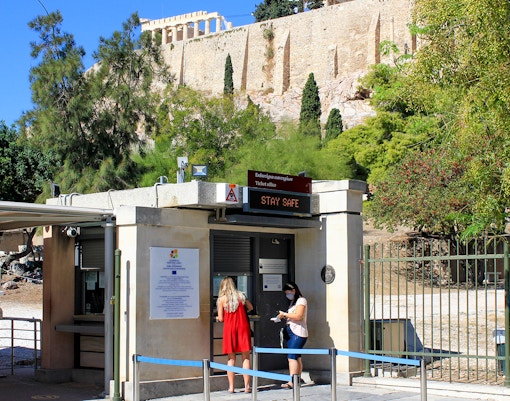
  • Can you just show up? On-site tickets are available, but advance booking is strongly recommended from June through September.
  • What most visitors miss: The Theatre of Dionysus on the South Slope, included with all tickets but easily skipped when attention stays on the summit.

🎟 The Acropolis limits daily visitors and morning timed slots sell out several days ahead from June through August. Book your slot before you arrive in Athens.

​→ See ticket options

Everything you need to know for your Acropolis visit

Where is the Acropolis of Athens located?

Getting to the Acropolis of Athens

Entrances

Entrance nameLocationWho it’s forCrowds & wait times

Main entrance (West Gate, Dionysiou Areopagitou Street)

Near Acropolis Metro Station, by the base of the Propylaea

General visitors, skip-the-line tickets, and most guided tours

Longest queues (20–60 min in summer); main entry for all group tours.

Southeast entrance (near the Acropolis Museum)

Junction of Makrygianni Street and Dionysiou Areopagitou

Independent visitors, skip-the-line tickets, museum + Acropolis combos

Shorter waits (~15–30 min); ideal for early arrivals and those combining museum entry.

North entrance (restricted)

Near the Ancient Agora and Areopagus Hill

Limited access for groups/exits only

Often used as an exit route; not always open for entry.

Acropolis timings

DayOpening hoursLast entry

1 April – 31 August

8am to 8pm

7:30pm

1 Sept – 15 Sept

8am to 7:30pm

7pm

16 Sept – 30 Sept

8am to 7pm

6:30pm

1 Oct – 15 Oct

8am to 6:30pm

6pm

16 Oct – 31 Oct

8am to 6pm

5:30pm

1 Nov – 31 Mar

8am to 5pm

4:30pm

Best time to visit

  • Weekday vs weekend: Weekdays are consistently quieter than weekends. The main entrance queue peaks on weekend mornings and between 10am and 2pm on any day.
  • When to go: April through mid-June and mid-September through October offer the best combination of manageable crowds and temperatures typically below 30°C. July and August bring the highest visitor volumes and temperatures that regularly exceed 35°C at the fully exposed summit, making the 11am–3pm window genuinely uncomfortable. November through March is the quietest period, though opening hours are shorter and daylight more limited.

The Acropolis is free on the first Sunday of each month from November through March. On those days, crowds double and the queue forms before opening. If your visit falls on a free Sunday, arrive at least 30–40 minutes before 8am.

💡The best single window at the Acropolis is a weekday morning between 8am and 9:30am from April through May or late September through October. The site is cool, the light is at its most photogenic on the Parthenon's eastern face, and the summit plateau is quiet enough to spend time at each monument without pressure.

​Browse through the Acropolis schedule>

How to make the most of your time

Visit typeDurationRouteWhat you get

Snapshot visit

1.5–2hrs

Propylaea (Main Gate) → Parthenon → Erechtheion → Theatre of Dionysus → Herodes Atticus Theatre

A focused, classic circuit hitting the Acropolis’ crown jewels first, with sweeping city views and minimal detours

Half-day classic

3–4hrs

Propylaea → Parthenon & Erechtheion → Theatre of Dionysus → Herodes Atticus Theatre → Exit via Ancient Agora

The quintessential experience, major landmarks first, then a scenic descent through Plaka’s charming alleys and cafés

Full-day immersion

6+ hrs

Acropolis → Propylaea → Parthenon & Erechtheion → South Slope → Ancient Agora → Acropolis Museum

A full narrative of Athens’ Golden Age, combining temples, theatres, and artifacts, expect ~10,000 steps and a complete sense of the city’s history

Know before booking your Acropolis tickets

Planning which Acropolis ticket to buy is about time control, queue avoidance, and depth of access. Do you need just basic entry, or a richer guided experience (or combo ticket for multiple sites)? The differences in access, cost, and constraints should steer your choice.

  • Book ahead: With a daily limit of 20,000 visitors and high demand for cooler morning slots, booking several days in advance is essential to secure your preferred time and avoid missing out.

  • Skip queues: Online bookings automatically grant fast-track entry helping you save 20 minutes to over an hour of waiting time and enter at your chosen timed slot, maximizing your sightseeing time.

  • Audio guides: For a small additional fee of €7, upgrade your standard ticket to include an audio guide, gaining rich historical insights at your own pace, without being tied to the fixed route of a group tour.

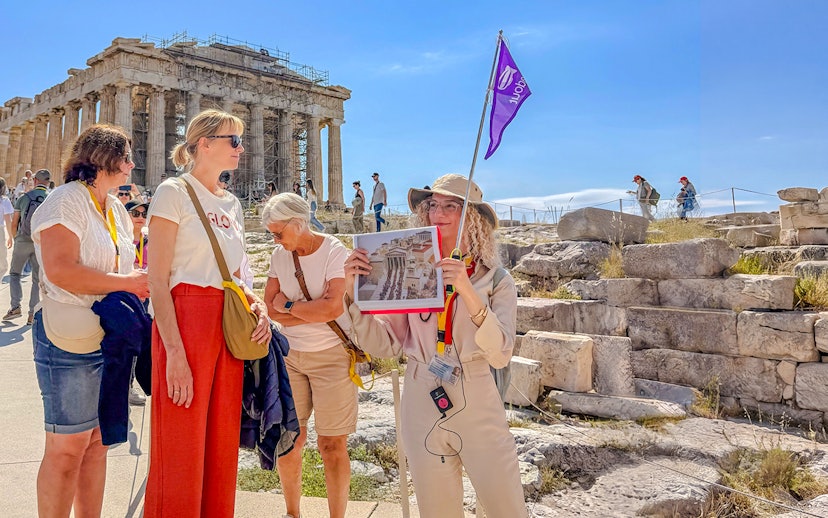
  • Guided tours: For a deep-dive experience, opt for a expert guide, who’d ensure you don’t miss major highlights, and save you from navigating the vast site alone. 

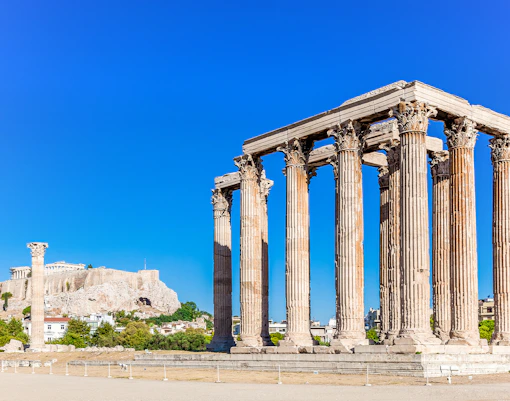
  • Combo sites: You can make the most of your day by combining the Acropolis with nearby sites, like the Temple of Olympian Zeus and the Ancient Agora, just a kilometer or two apart. You get up to 40% discount with multilingual audio guides, perfect for a full-day, budget-friendly tour of ancient Athens.

Your Acropolis ticket types explained

Ticket typeWhat’s includedBest for

Standard entry

Access to the Acropolis; available for on-site purchase

Visiting November through March when queues are short and flexibility over exact timing matters more than guaranteeing a specific slot

From €30

Timed entry with audio guide

Timed entry, no ticket queue, multilingual audio guide

Visiting April through October at a chosen time-slot, including busy summer mornings, with self-paced historical commentary in your language

From €39

Guided tour (group)

Fast-track entry + expert English-speaking guide

Visiting June through August when the site is at its busiest and guided routing through a 3-hectare site with limited signage saves time and adds depth

From €67

Guided tour (private)

Fast-track entry + Guide + Group of 12 guests + Customized itinerary

Best for groups wanting exclusivity with enriching experience

~€440

Acropolis + Museum combo

Access to Acropolis + Parthenon + Acropolis Museum

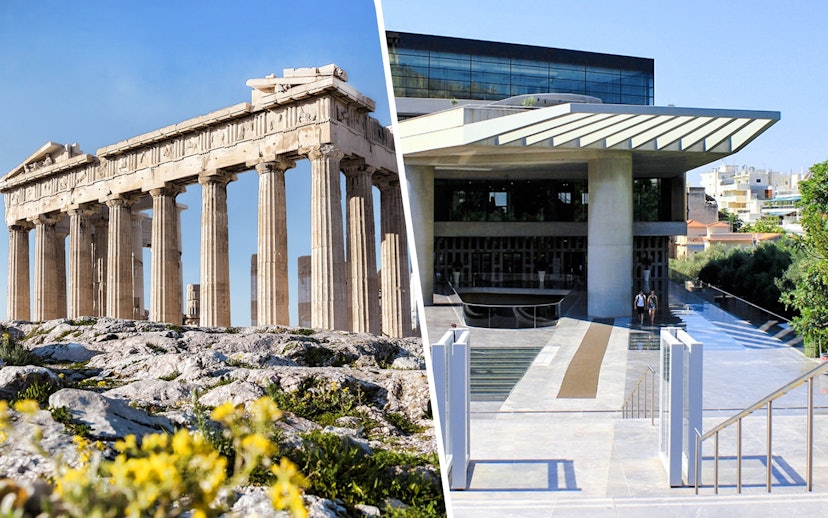
Planning to visit both the archaeological site and the museum holding the original Parthenon friezes in the same half-day

~€74

Megapass

Entry to Acropolis + 2 day Hop-on-hop-off bus tour + up to 3 stops of your choice

Relaxed and flexible experience of key landmarks in Athens

From €79

Navigate your way

The Acropolis is divided into several distinct zones, each with its own monuments and terraces, connected by steep paths and two main entrances. Planning where to start can save you time and effort.

Explore the Acropolis
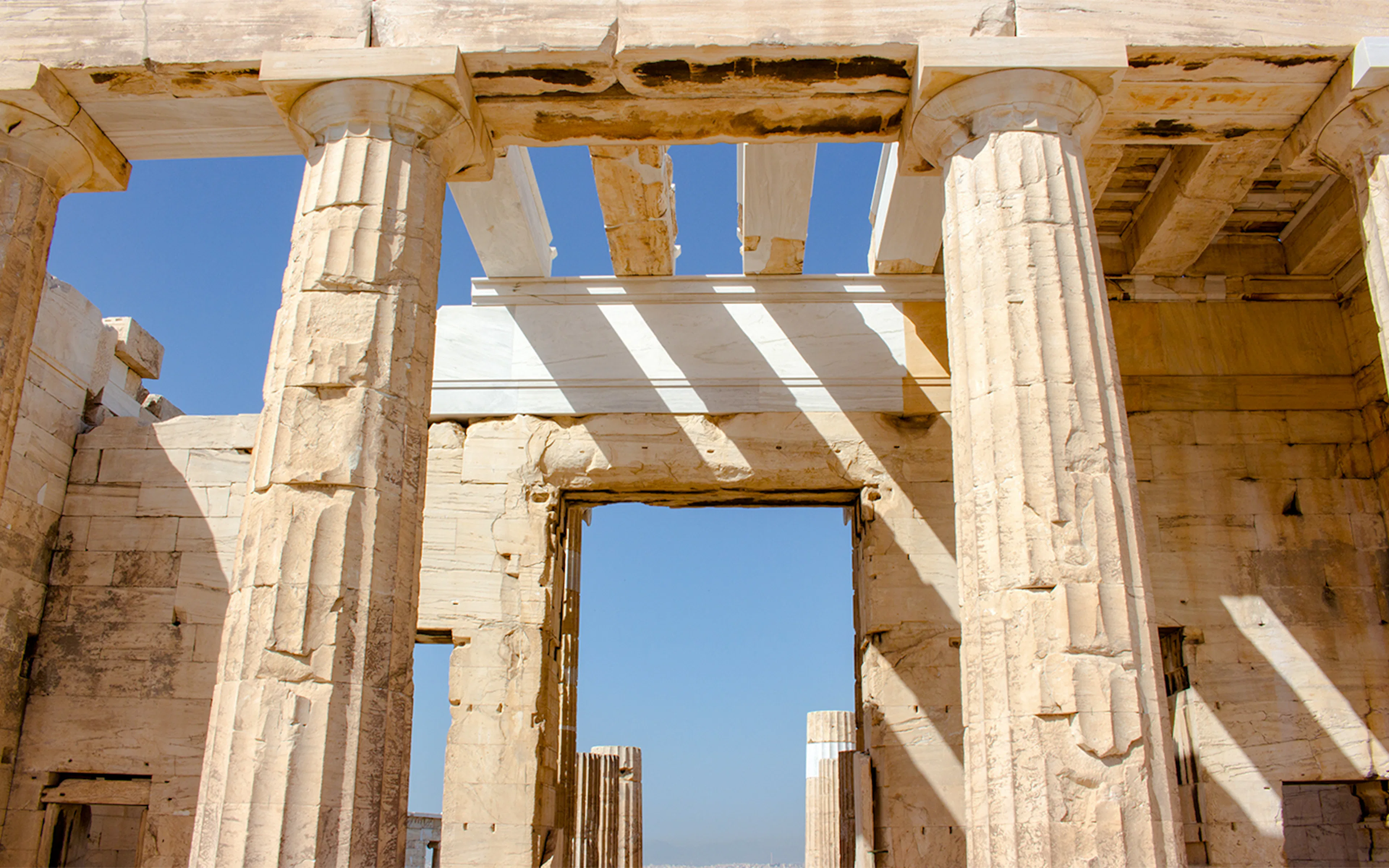
Propylaea columns and coffered ceiling detail at the Acropolis, Athens.
1/6

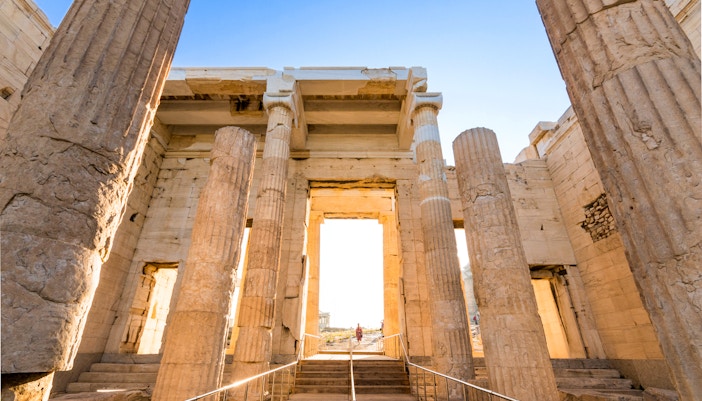
Propylaea

The grand marble gateway leading onto the Acropolis plateau.
What to look out for: The sweeping marble stairway, ornate coffered ceilings with faded paint, and the first framed view of the Parthenon.

Walk through the Propylaea

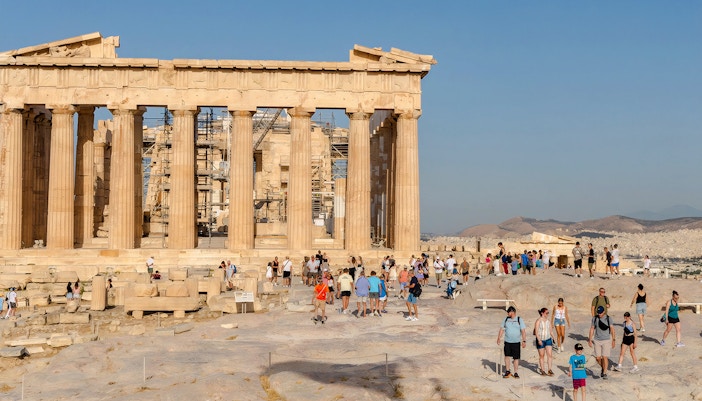
Parthenon

Athena’s temple and the timeless symbol of Athenian glory.
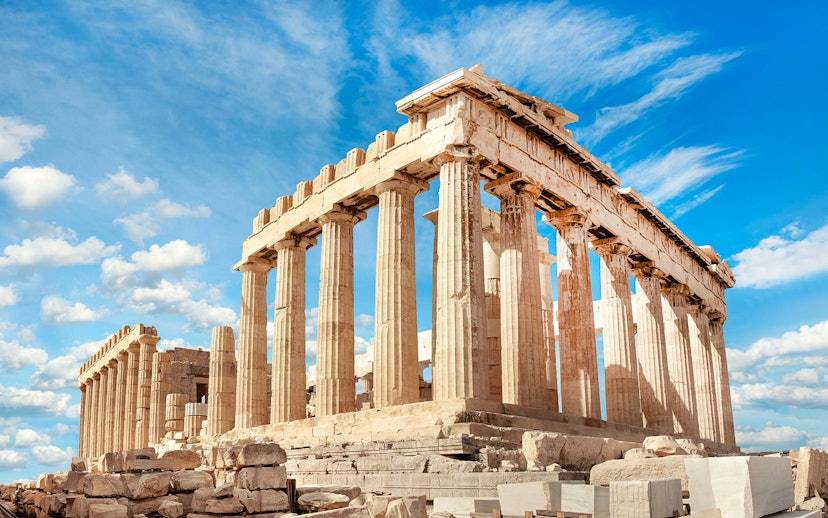
What to look out for: Curved Doric columns, sculpted pediments once painted bright, and panoramic views over Athens.

View the Parthenon

Erechtheion

A graceful, asymmetrical temple rich in myth and detail.
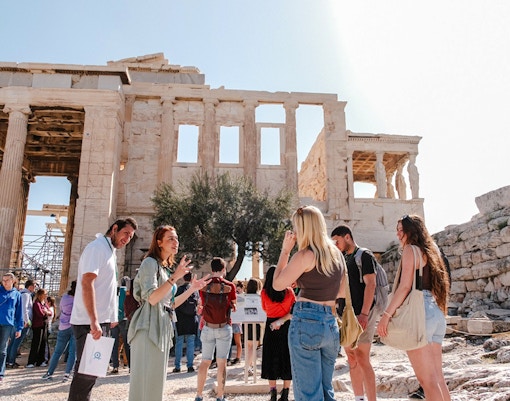
What to look out for: The elegant Caryatids, Athena’s sacred olive tree, and its tiered architectural design.

Explore the Erehtheion

Temple of Athena Nike

A graceful shrine honoring Athenian victory.
What to look out for: Slender Ionic columns, detailed battle friezes, and its cliffside perch offering sweeping views of Athens.

Stroll through the temple

Theatre of Dionysus

The birthplace of ancient Greek drama.
What to look out for: Stone tiers that once seated 17,000 spectators, marble thrones for dignitaries, and the open-air stage that once echoed with tragedy and comedy.

Step into the theatre

Odeon of Herodes Atticus

A Roman amphitheater still alive with performances today.
What to look out for: Restored marble seating, remarkable acoustics, and magical night concerts beneath the glowing Acropolis.

Experience the Odeon

Facilities and accessibility

Rules and restrictions

  • All visitors must pass through airport-style security before entry.
  • Large bags, tripods, and umbrellas are not allowed inside; leave them at the cloakrooms near the entrance.
  • Food and drinks are prohibited on the hill; sealed water bottles are the exception.
  • Smoking and vaping are strictly forbidden throughout the site.
  • Touching the monuments or crossing protective barriers is not permitted.
  • Photography is permitted throughout the site for personal use. Flash photography, tripods, selfie sticks, and drones are not permitted anywhere on the archaeological site.
  • Re-entry is not permitted once you exit. Plan restroom stops and rest breaks before leaving the site.
  • Service animals are permitted with valid documentation.

Practical tips

  • Book your slot with lead time: From June through August, book at least 3–5 days ahead for weekday mornings and 7–10 days for weekend mornings. Outside this window, 24–48 hours is generally sufficient, though booking earlier is always safer.
  • Time your arrival to the weather: The summit has no shade and marble surfaces reflect heat directly. Before 9:30am and after 4pm are the workable windows in July and August. The 11am–3pm period can be genuinely difficult — marble radiates heat and the plateau offers no relief.
  • Choose your entrance by what you're doing: The Southeast entrance (near the Acropolis Museum) typically has 15–30 minute waits versus 20–60 minutes at the main West Gate in summer. If you plan to visit the museum on the same day, the Southeast entrance saves a separate backtrack.
  • Follow marked paths: The site has clearly marked trails on uneven and sometimes steep terrain. Straying from them is unsafe on the exposed rock faces and not permitted. Closed-toe shoes with grip are worth wearing, particularly if there is any chance of rain when the marble becomes slippery.
  • Audio guide hacks:  Download the official Acropolis Museum app in advance; it saves €5–7 compared to on-site rentals. For even more context, combine it with free PDFs of temple inscriptions and site maps available from the Hellenic Ministry of Culture.
  • Free-entry Sundays: The Acropolis is free on the first Sunday of each month from November through March, but crowd levels double. Arriving 30–40 minutes before the 8am opening is the most effective way to beat the surge on those days.
  • Photography best spots: The best angle on the Parthenon is from the northwest terrace near its main stairs in morning light before tour groups arrive. For the Erechtheion, position yourself to face the Caryatid Porch directly. The Theatre of Dionysus, often uncrowded, photographs well from the top tier of seating looking back toward the South Slope.
  • Food and water: No food inside. The drinking fountain near the Theatre of Dionysus is reliable for refills. The Acropolis Museum cafe on the slope below is the best post-visit option for a sit-down break.
  • Restrooms: Available at both entrances and on the summit plateau. Facilities are limited inside the site itself, so use them before climbing to avoid having to exit.
  • Seasonal exhibitions: Check the Acropolis Museum schedule; smaller exhibits near the museum café often feature restoration workshops or 3D models, which are rarely crowded.
  • Bonus tip: Bring a light magnifying glass or monocular if you’re into architectural details; subtle carvings and painted traces on friezes are easier to see. 

What else is worth visiting nearby?

Commonly combined with the Acropolis

✨ The Acropolis and Acropolis Museum are the most natural same-day combination. The Athens Multipass covers both plus five additional sites and typically saves 15–20% against buying individual tickets.

​→ See combo options

Eat, shop and stay near Acropolis

Frequently asked questions about visiting the Acropolis

Yes, it’s a must-visit. The Acropolis showcases ancient Greek history, architecture, and stunning Athens views, offering a powerful glimpse into classical civilization.

More reads